
How Do I Reduce Energy Usage For Businesses? | Spark Lighting
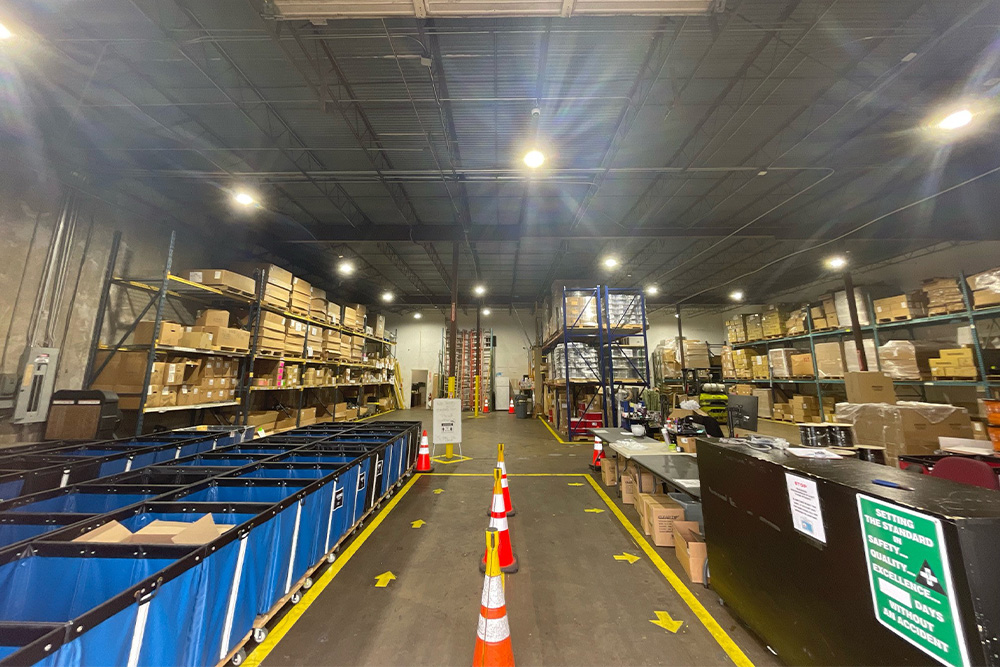
Energy usage can quietly become one of the biggest operating costs for a business. Lights stay on longer than they should, HVAC systems work harder than necessary, equipment runs after hours, and older fixtures or controls can pull more power than a space actually needs.
For businesses with warehouses, offices, sports facilities, parking lots, industrial buildings, or multi-building properties, even small energy habits can turn into major monthly expenses.
Reducing energy use is not just about lowering utility bills. It also helps improve building performance, supports a more comfortable and productive environment, reduces strain on equipment, and gives businesses more room in the budget for growth.
The U.S. Department of Energy notes that commercial buildings have high energy needs and can place strain on power grids during peak periods, while more efficient buildings can lower operating costs for businesses (U.S. Department of Energy, n.d.).
At Spark Lighting, every project starts with making complex lighting and energy decisions feel simpler. From smart assessments to tailored LED lighting design and installation, the goal is to help businesses see their spaces more clearly, operate more efficiently, and move forward with confidence.
The best place to start is by understanding where energy is being used, where it is being wasted, and which upgrades can make the biggest difference.
What Businesses Can Do to Save Energy
Benchmark Your Current Energy Usage
Before making upgrades, businesses should know what they are working with. Benchmarking gives you a baseline, which makes it easier to track improvements, compare usage over time, and understand whether energy-saving changes are actually working.
ENERGY STAR recommends using Portfolio Manager to measure energy and water use, compare performance against similar businesses, and track changes related to weather, occupancy, and usage patterns (ENERGY STAR, 2025).
A good starting point is to gather at least 12 months of utility bills, review peak usage months, and note any changes in hours, occupancy, or equipment. This helps separate normal seasonal changes from real waste. Once a baseline is in place, every improvement becomes easier to measure, whether it is an LED lighting upgrade, HVAC tune-up, or operations change.
Upgrade To LED Lighting
LED lighting is one of the most effective ways businesses can reduce energy usage, especially in spaces with long operating hours. ENERGY STAR states that LEDs use up to 90% less energy than incandescent lighting and can last 35 to 50 times longer, which means they can reduce both energy use and maintenance needs (ENERGY STAR, n.d.). For offices, warehouses, parking lots, sports facilities, and industrial spaces, that combination can make a major difference.
The key is not just replacing bulbs one-for-one. A professional LED lighting design should consider fixture placement, light levels, glare, visibility, safety, and how the space is actually used. With the right design, businesses can improve illumination while avoiding over-lighting, reducing heat gain, and creating a cleaner, more reliable lighting system.
Use Lighting Controls And Daylight More Strategically
Businesses often waste energy because lights stay on in empty rooms, storage areas, hallways, restrooms, parking lots, or outdoor areas during daylight hours. ENERGY STAR recommends turning off lights when not in use, making better use of daylight, using task lighting where possible, and adding controls such as occupancy sensors, timers, daylight sensors, and dimming controls (ENERGY STAR, n.d.; ENERGY STAR, 2025). These upgrades help lighting respond to real conditions instead of running on habit.
This is especially useful in buildings where different areas have different schedules. A warehouse aisle, office conference room, restroom, or exterior fixture may not need full lighting all day. When controls are installed and calibrated correctly, they help reduce waste without asking employees to remember every switch.
Improve HVAC Maintenance and Temperature Settings
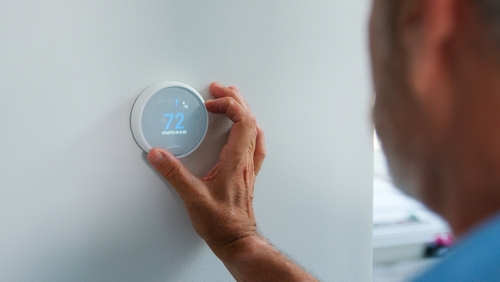
Heating and cooling are major energy users in many commercial buildings, so HVAC maintenance should be part of any energy reduction plan. ENERGY STAR recommends monthly maintenance during peak seasons, regular filter changes, thermostat calibration, seasonal set point adjustments, and making sure vents are not blocked by furniture or paper (ENERGY STAR, n.d.). Even simple issues like dirty filters or blocked vents can make equipment work harder than it should.
Businesses should also review temperature settings for evenings, weekends, holidays, and low-occupancy periods. If a building is being cooled or heated like it is fully occupied when it is nearly empty, energy is being wasted. A practical schedule, paired with regular maintenance, can reduce energy use while helping equipment last longer.
Seal Air Leaks And Improve The Building Envelope
A building can lose a lot of energy through gaps, cracks, poor insulation, leaky doors, and unsealed ducts. ENERGY STAR recommends inspecting doors, windows, HVAC joints, vents, and ducts for places where air exchange is accidental instead of intentional (ENERGY STAR, 2025). Sealing those areas helps the building hold conditioned air more effectively, which reduces the workload on heating and cooling systems.
This does not always require a major renovation. Weather stripping, caulking, foam sealing, and basic insulation repairs can make a noticeable difference, especially in older commercial spaces. When the building envelope performs better, HVAC improvements, lighting upgrades, and other efficiency steps can work even more effectively together.
Conduct A Facility Walkthrough Or Energy Audit
A facility walkthrough can reveal the small energy problems that are easy to miss during a busy workday. ENERGY STAR recommends using a checklist to walk through the business, identify opportunities, and note the location, tools, materials, expertise, and follow-up needed for each item (ENERGY STAR, 2025). The U.S. Department of Energy also recommends energy-saving action through operations, maintenance, retrofits, and overall energy management (U.S. Department of Energy, n.d.).
During the walkthrough, look for lights left on, exterior “day-burners,” dirty fixtures, air leaks, blocked vents, outdated lighting, inefficient equipment, and areas that are over-lit or under-lit. Businesses can also ask their utility whether free or low-cost energy audits are available. The goal is to turn vague concerns into a clear action list.

Create A Culture Of Energy Awareness
Technology matters, but people still play a major role in energy savings. ENERGY STAR encourages businesses to educate staff, ask employees to report leaks, turn off lights not in use, support recycling, and participate in efficiency efforts (ENERGY STAR, 2025). The Department of Energy also notes that creating a culture of efficiency across an organization can lead to significant energy and monetary savings (U.S. Department of Energy, n.d.).
This works best when the process is simple and visible. Businesses can post reminders near switches, assign a team member to check closing procedures, share energy goals with staff, and celebrate progress when bills drop. When employees understand that saving energy helps the business operate smarter, small daily habits start to add up.
Plan Retrofits Around Payback, Rebates, And Long-Term Value
Some energy-saving changes are low-cost, while others require a larger investment. The Department of Energy notes that financing opportunities for efficiency improvements can include tax credits, grants, rebates, loans, leasing, and other approaches (U.S. Department of Energy, n.d.). ENERGY STAR also recommends calculating savings and understanding payback periods before moving forward with upgrades (ENERGY STAR, 2025).
For lighting projects, rebates can be especially valuable when available through local utility or municipal programs. Businesses should look beyond the upfront price and consider reduced energy usage, lower maintenance, improved visibility, better safety, and longer equipment life. The right retrofit should support both immediate savings and long-term building performance.
Energy Reduction Tips at a Glance
|
Energy-Saving Tip |
What It Helps Reduce |
Best Business Fit |
|
Benchmark energy use |
Unknown waste and unclear performance |
Any commercial building |
|
Upgrade to LED lighting |
Lighting electricity and maintenance costs |
Offices, warehouses, parking lots, sports facilities, industrial spaces |
|
Add lighting controls |
Lights running in empty or naturally lit areas |
Restrooms, halls, storage areas, exterior lighting |
|
Maintain HVAC systems |
Overworked heating and cooling equipment |
Offices, retail spaces, warehouses, mixed-use buildings |
|
Seal air leaks |
Heating and cooling loss |
Older buildings, warehouses, offices |
|
Conduct walkthroughs or audits |
Hidden inefficiencies |
Businesses unsure where to start |
|
Train employees |
Daily operational waste |
Any team-based workplace |
|
Use rebates and payback planning |
High upfront project costs |
Businesses planning lighting or equipment retrofits |
Why Spark Lighting Is Built For Commercial Energy Savings
Businesses choose Spark Lighting because energy-saving lighting projects should feel clear, not complicated. With more than 500,000 lights installed, 20+ years of combined experience, work across 100+ municipalities, and commercial installations throughout Texas, Spark Lighting brings the scale and know-how needed for projects that demand precision.
From assessment and photometric design to installation, rebate guidance, and standards-focused solutions for sports, industrial, warehouse, outdoor, and solar LED lighting, Spark Lighting helps businesses move from “we need better lighting” to a smarter, more efficient system built around their space.
Start Saving Energy With The Right Lighting Partner
Reducing energy usage starts with understanding your building, then making focused improvements that match how your business actually operates. Benchmarking, LED lighting, lighting controls, HVAC maintenance, air sealing, walkthroughs, employee habits, and rebate planning can all help reduce waste and improve long-term performance.
The most effective results usually come from combining practical day-to-day changes with upgrades that are designed and installed correctly. Spark Lighting is the ideal partner for businesses that want a clearer path to energy savings.
With expert assessment, tailored lighting design, professional installation, and deep experience across Texas commercial and industrial spaces, Spark Lighting helps businesses improve visibility, reduce energy waste, and simplify the entire lighting upgrade process. Schedule your free Spark Consultation today and let’s light up your business with a smarter, more efficient LED lighting solution.
References
- https://www.energy.gov/commercial-buildings
- https://www.energy.gov/cmei/buildings/take-action-save-energy-commercial-buildings
- https://www.energystar.gov/buildings/save-energy-commercial-buildings/ways-save/checklists
- https://www.energystar.gov/sites/default/files/2025-01/Small%20Business%20Toolkit_Jan2025.pdf
- https://www.eia.gov/consumption/commercial/reports.php