
What are the Benefits of LED Lights? | Spark Lighting
LED lighting has become one of the most popular lighting choices for both residential and commercial spaces. You can find it in homes, offices, warehouses, parking lots, sports facilities, streets, pathways, industrial buildings, and outdoor areas. That popularity makes sense because LED lighting offers a strong mix of energy savings, long-term performance, design flexibility, and reliable illumination.
For homeowners, LED lights can make everyday spaces feel brighter, more comfortable, and more efficient. For businesses and property owners, they can help reduce operating costs, improve visibility, lower maintenance needs, and create safer, better-lit environments.
The U.S. Department of Energy describes LED as today’s most energy-efficient and rapidly developing lighting technology, with quality LED products offering long life, durability, and comparable or better light quality than other lighting types (U.S. Department of Energy 2025).
At Spark Lighting, lighting is about more than simply replacing old fixtures. It is about helping people create spaces that are easier to use, safer to move through, and more efficient to operate. Whether the project involves a commercial building, outdoor property, sports complex, warehouse, industrial site, or large-scale LED upgrade, understanding the benefits of LED lighting helps make every decision clearer.
WHY CHOOSE LED LIGHTING?
LED Lights Use Less Energy
LED lighting is one of the easiest upgrades for reducing electricity use at home or in a business. Compared with traditional incandescent bulbs, LEDs use far less power while still providing strong, reliable brightness.
Where LEDs Make the Biggest Difference
In homes, LEDs can help reduce energy use in:
- Kitchens
- Bathrooms
- Bedrooms
- Garages
- Outdoor spaces
For businesses, the savings can be even more noticeable because:
- Lights often stay on for longer hours
- Larger areas need consistent illumination
- Multiple fixtures may be used throughout the day
- Reduced energy demand can add up over time
Switching to LED lighting is a simple, practical way to improve illumination while using significantly less electricity. Whether for a home or a business, LEDs offer a more efficient lighting option that can support lower energy costs and better long-term performance.
LED Lights Last Longer
LED lights are also known for their long lifespan. The Department of Energy says residential LEDs can last up to 25 times longer than incandescent lighting, and a good-quality LED bulb can last 3 to 5 times longer than a CFL and 30 times longer than an incandescent bulb (U.S. Department of Energy 2025a). ENERGY STAR also explains that LEDs usually do not burn out suddenly like older bulbs, but gradually dim over time through lumen depreciation (ENERGY STAR n.d.).
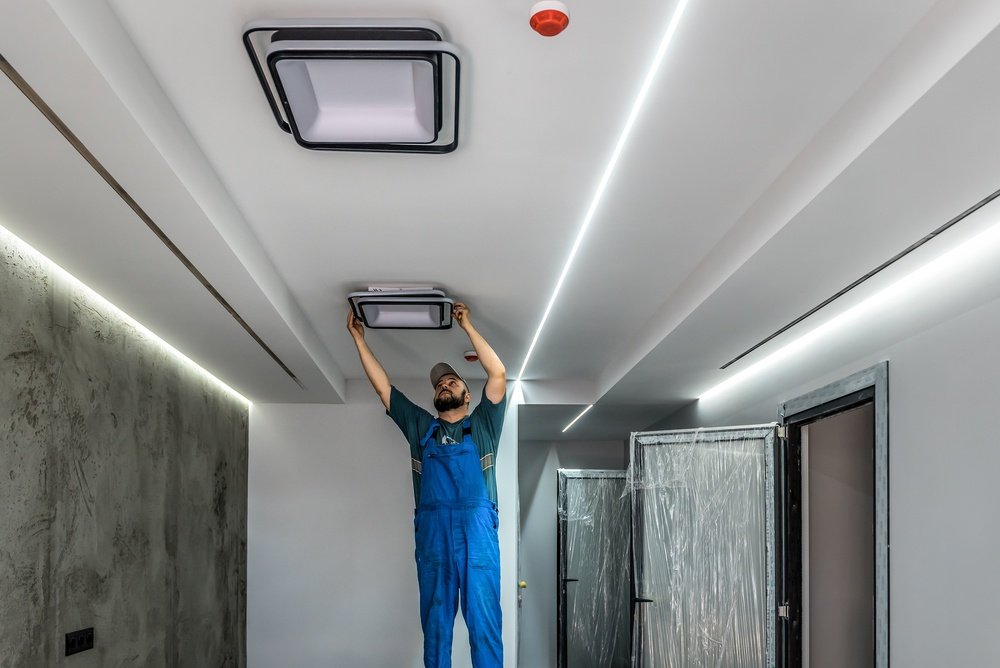
This longer lifespan is useful in almost any setting. At home, it means fewer trips to replace bulbs in ceiling fixtures, exterior lights, or hard-to-reach areas. In commercial, municipal, and industrial spaces, it can reduce labor, lift rentals, downtime, and the inconvenience of constantly replacing lamps.
LED Lighting Can Lower Maintenance Needs
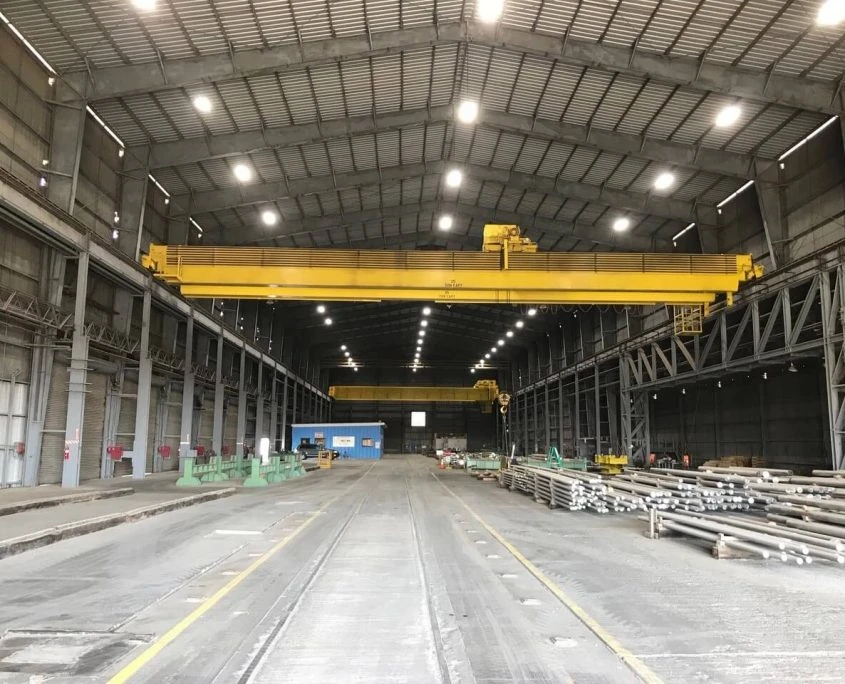
Because LED lights last longer, they can also reduce the amount of maintenance a lighting system needs. This is especially helpful in spaces where fixtures are difficult or expensive to access, such as high ceilings, parking lots, sports fields, warehouses, exterior poles, and industrial facilities. Fewer replacements mean fewer interruptions and less time spent dealing with lighting problems.
For homeowners, lower maintenance simply makes life easier. For property owners and facility managers, it can make operations more efficient and predictable. The National Renewable Energy Laboratory also identifies LED lighting as an energy-saving measure in building performance analysis, which reinforces its value as part of long-term efficiency planning (Van Sant, CaraDonna, and Parker 2023).
LED Lights Produce Less Wasted Heat
LED lights are more efficient partly because they waste less energy as heat. The Department of Energy explains that incandescent bulbs release 90% of their energy as heat, while CFLs release about 80% of their energy as heat (U.S. Department of Energy 2025a). ENERGY STAR also explains that LED products use heat sinks to absorb and dissipate heat so the lighting can perform properly over time (ENERGY STAR n.d.).
This can make a difference in indoor spaces where comfort matters. In homes, older lighting can add unnecessary warmth to rooms, especially when several fixtures are used at once. In offices, warehouses, retail spaces, and industrial buildings, reducing excess heat from lighting can help support a more comfortable environment and reduce unnecessary strain on cooling systems.
LED Lights Offer Better Directional Control
LEDs are naturally directional, which means they send light in a specific direction. The Department of Energy notes that this can reduce the need for reflectors and diffusers that can trap light, making LEDs more efficient for applications like recessed downlights and task lighting (U.S. Department of Energy 2025a). In simple terms, more of the light goes where it is actually needed.
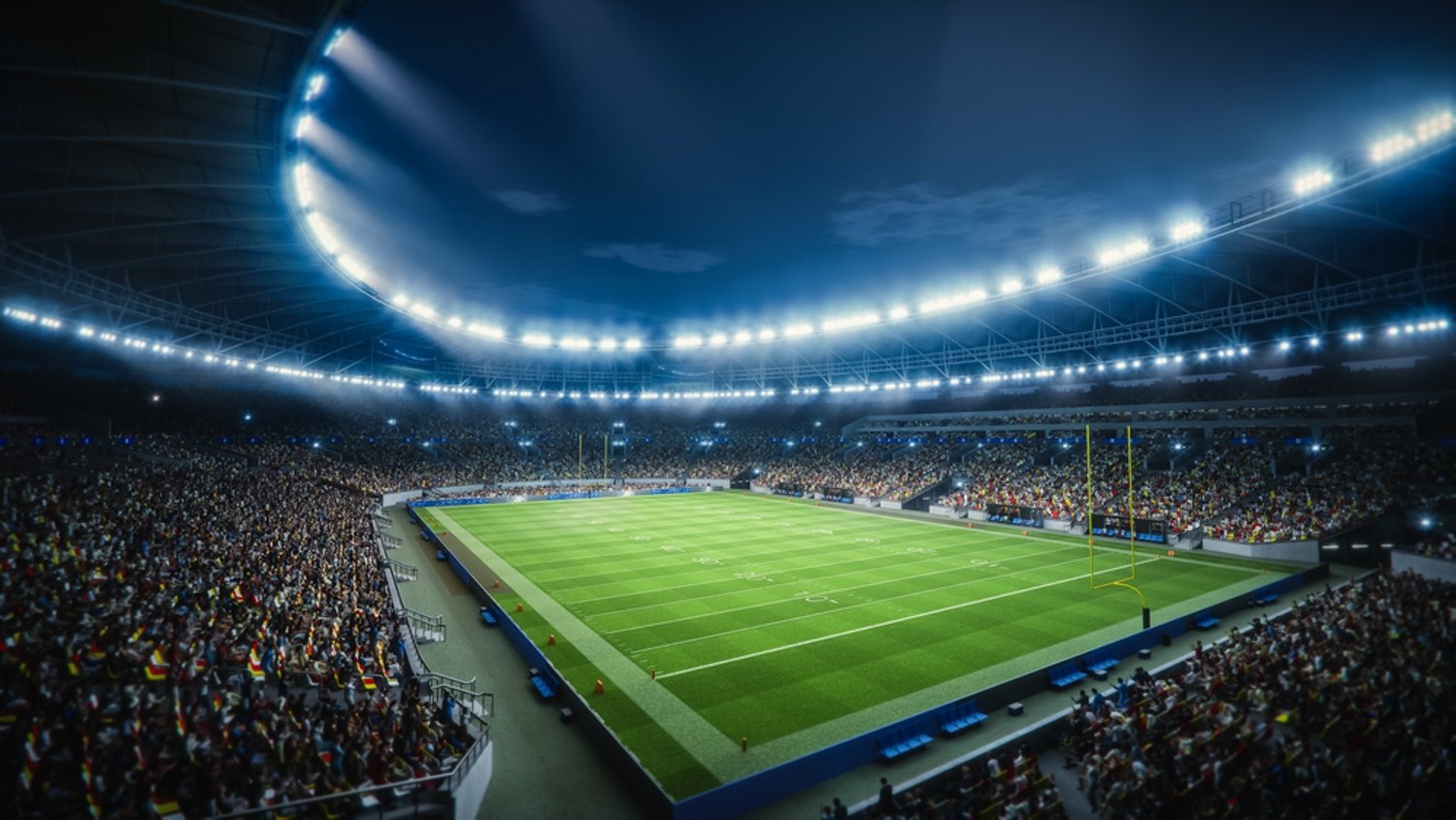
This benefit works well in both residential and commercial settings. At home, directional LED lighting can help with kitchens, desks, bathrooms, patios, and accent lighting. In commercial spaces, it can improve visibility in aisles, workstations, parking lots, walkways, loading docks, sports areas, and exterior spaces without wasting light in the wrong places.
LED Lighting Works Indoors And Outdoors
Another major benefit of LED lighting is versatility. The Department of Energy notes that LEDs are now common in street lights, parking garage lighting, walkway lighting, outdoor area lighting, refrigerated case lighting, modular lighting, and task lighting (U.S. Department of Energy 2025a). Another DOE guide says LEDs work well indoors and outdoors because of their durability and performance in cold environments (U.S. Department of Energy 2025b).
That flexibility makes LED lighting useful across many kinds of spaces. A homeowner might use LED lights for the kitchen, garage, landscaping, porch, and security lighting. A commercial property may need LED solutions for offices, warehouses, parking lots, pathways, signage areas, loading zones, and building exteriors.
LED Lighting Pairs Well With Controls
LED lighting works well with modern lighting controls, including dimmers, timers, daylight sensors, motion sensors, and automatic shutoff features. The Department of Energy recommends using controls like timers and dimmers to save electricity, and it notes that outdoor LED fixtures may include automatic daylight shutoff and motion sensors (U.S. Department of Energy 2025b). These controls help lighting respond to real use instead of staying on at full power all the time.
For homes, that can mean dimmable living room lights, motion-activated exterior lighting, or automatic outdoor fixtures that turn off during the day. For businesses and larger properties, controls can reduce wasted energy in restrooms, storage rooms, hallways, conference rooms, parking lots, warehouses, and outdoor areas. When LED lighting and controls are designed together, the system becomes more convenient and efficient.
LED Lighting Can Improve Visibility And Comfort
LED lighting is not only about saving energy. It can also improve the way a space looks and feels. The Department of Energy says quality LED light bulbs last longer, are more durable, and offer comparable or better light quality than other lighting types (U.S. Department of Energy 2025a). DOE’s LED Basics page also explains that LED technology can produce high-quality white light with strong energy efficiency (U.S. Department of Energy n.d.).
In a home, better lighting can make rooms feel cleaner, brighter, and more inviting. In a workplace, warehouse, parking area, or sports facility, better visibility can help people move more confidently and complete tasks more comfortably. The right LED setup can improve both appearance and function, which is why design matters just as much as the fixture itself.
LED Lighting Supports Safety And Security
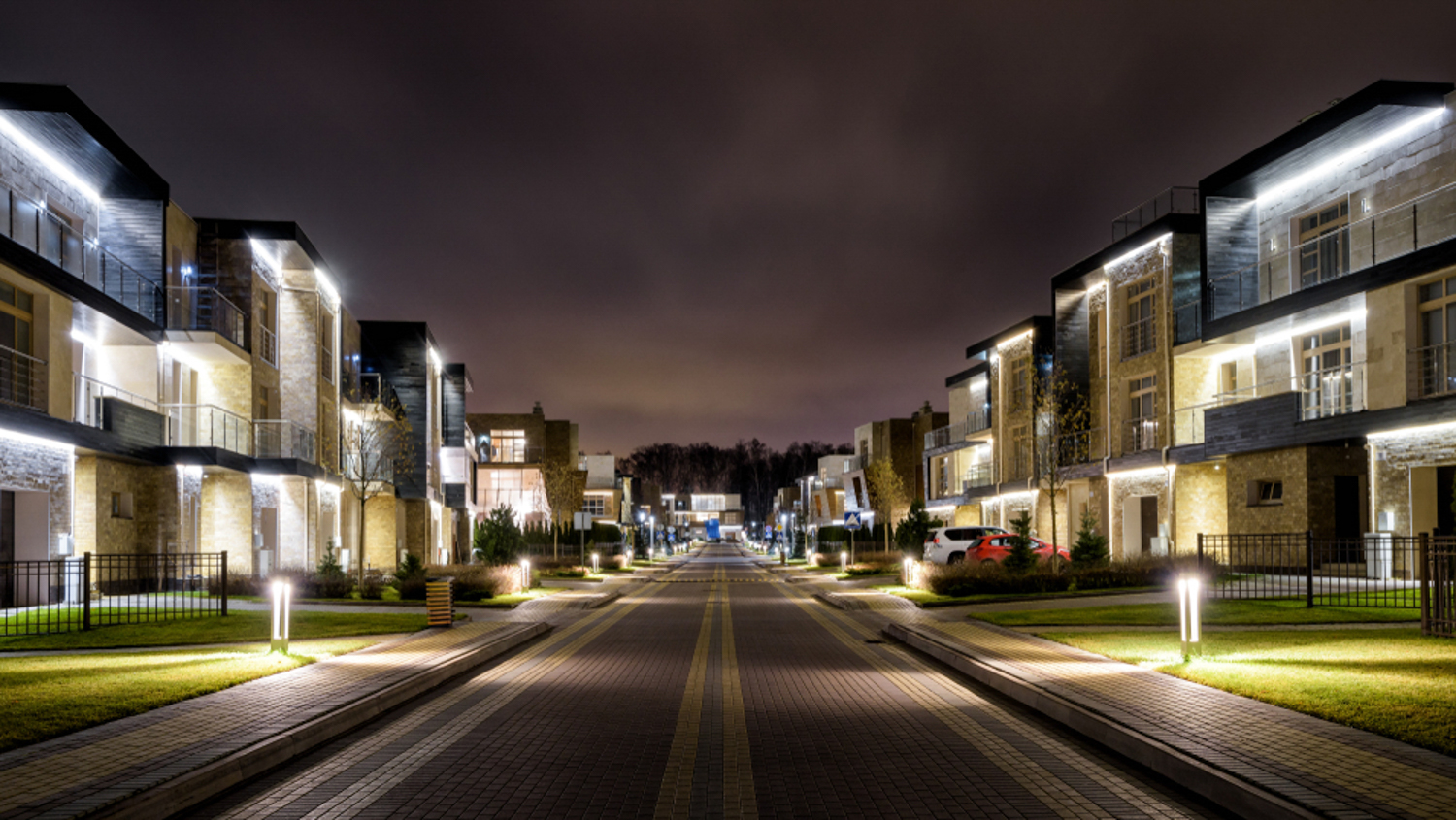
Good lighting plays an important role in how safe and usable a space feels. LED lighting can help brighten walkways, entrances, parking lots, driveways, loading areas, storage spaces, and exterior building areas. When people can see clearly, they are more likely to feel comfortable moving through a space.
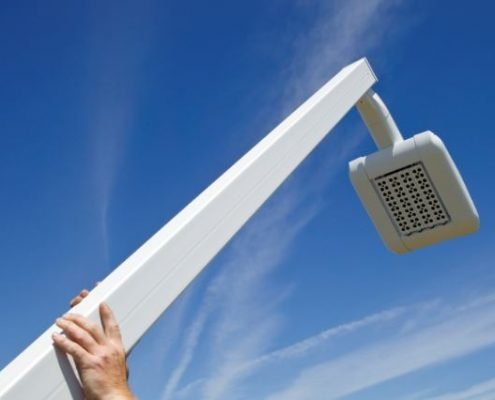
For homeowners, LED exterior lighting can improve visibility around porches, garages, pathways, and yards. For commercial and municipal spaces, LED lighting can support safer parking areas, sports facilities, public walkways, and industrial zones. When lighting is designed carefully, it can reduce dark spots, improve coverage, and support a better experience for everyone using the property.
LED Lighting Supports Long-Term Efficiency Goals
LED lighting is part of a larger movement toward smarter, more efficient spaces. The Department of Energy says widespread use of LED lighting could lead to major national energy savings by 2035, and DOE’s Solid-State Lighting Program focuses on energy-efficient products that support health, productivity, and well-being (U.S. Department of Energy 2025a; U.S. Department of Energy n.d.). That makes LED lighting a practical choice for both everyday savings and long-term sustainability.
For property owners, the value is clear. LED lighting can reduce energy waste, lower replacement needs, improve visibility, and support modern controls. Whether the project is a small home upgrade or a large commercial retrofit, LED lighting offers benefits that continue long after installation.
Lighting Expertise That Brings Clarity
People choose Spark Lighting because lighting upgrades should feel clear from the first conversation to the final installation. With more than 500,000 lights installed, 20+ years of combined experience, and work across 100+ municipalities, Spark Lighting brings dependable experience to projects that need careful planning and clean execution.
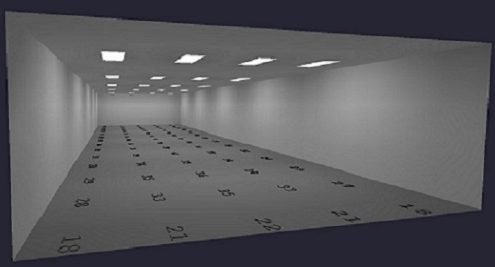
Spark Lighting helps simplify every step, from assessment and photometric design to LED installation and rebate guidance. Whether the project involves sports lighting, solar LED lighting, outdoor lighting, industrial lighting, or warehouse lighting, the team helps property owners create brighter, more efficient spaces without the guesswork.
Make The Switch To Smarter Lighting
LED lighting offers meaningful benefits for homes, businesses, outdoor spaces, sports facilities, warehouses, industrial properties, and municipal areas. It can reduce energy use, last longer, lower maintenance needs, produce less wasted heat, improve visibility, pair with smart controls, and support safer, more comfortable spaces. These benefits make LED lighting one of the most practical upgrades for anyone looking to improve how a property looks, feels, and performs.
Spark Lighting is the ideal partner for LED projects that need more than a basic fixture swap. With professional assessment, tailored lighting design, expert installation, and experience across Texas lighting projects of all sizes, Spark Lighting helps turn the benefits of LED into a clear, reliable solution. Schedule your free Spark Consultation today and let’s create a brighter, more efficient lighting solution for your space.
References
- Energy.gov. (2026). LED Lighting. https://www.energy.gov/energysaver/led-lighting
- Energy.gov. (2026). LED Basics. https://www.energy.gov/cmei/ssl/led-basics
- Energy.gov. (2026). Solid-State Lighting. https://www.energy.gov/cmei/ssl/solid-state-lighting
- Energy Star. (2026). Learn About LED Lighting. https://www.energystar.gov/products/learn-about-led-lighting
- Energy.gov. (2026). Lighting Choices to Save You Money. https://www.energy.gov/energysaver/lighting-choices-save-you-money
- NREL. (2024). Technical Report: 86100. https://docs.nrel.gov/docs/fy24osti/86100.pdf